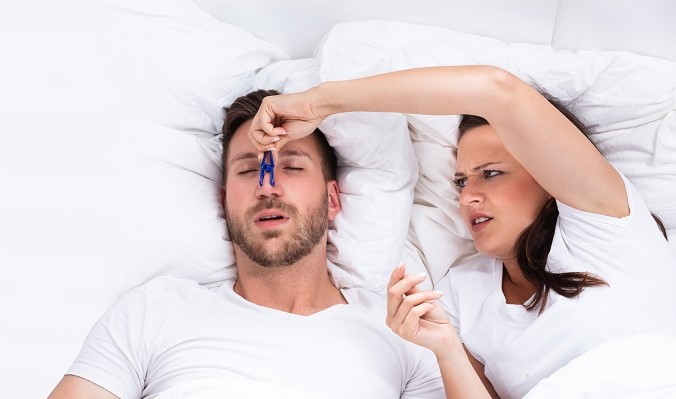
Balloon sinuplasty is designed to improve drainage through certain blocked sinus openings, but it is not a primary treatment for obstructive sleep apnea.
However, some people with sleep apnea also have chronic sinus congestion or nasal obstruction that makes nighttime breathing more difficult. In those cases, treating the sinus problem may improve nasal airflow and make sleep or other sleep apnea treatments more comfortable.
What Is Obstructive Sleep Apnea?
Obstructive sleep apnea, commonly called OSA, occurs when the upper airway repeatedly becomes blocked or narrowed during sleep.
These interruptions can reduce airflow and cause repeated awakenings throughout the night.
Common symptoms may include:
- Loud or persistent snoring
- Pauses in breathing during sleep
- Waking up gasping or choking
- Daytime sleepiness or fatigue
- Morning headaches
- Difficulty concentrating
- Dry mouth after waking
- Restless or disrupted sleep
Snoring alone does not necessarily mean someone has sleep apnea. A sleep evaluation is needed to determine whether OSA is present.
Can Sinus Problems Make Sleep Apnea Symptoms Feel Worse?
Nasal congestion and sinus inflammation can make it harder to breathe comfortably through the nose at night.
For someone who already has obstructive sleep apnea, additional nasal obstruction may make nighttime breathing feel more difficult and can sometimes make CPAP use less comfortable.
Treating nasal obstruction may improve breathing and sleep quality, but it does not necessarily eliminate the airway collapse responsible for OSA. Nasal treatment is often considered an additional part of a larger sleep apnea treatment plan. :chatgpt-content-reference{index="1"}
Can Balloon Sinuplasty Treat Sleep Apnea?
Balloon sinuplasty does not directly treat the throat or tongue base collapse that commonly causes obstructive sleep apnea.
Its purpose is to widen certain blocked sinus openings and improve sinus drainage.
If chronic sinusitis or poor sinus drainage is contributing to nasal obstruction, balloon sinuplasty may improve nasal breathing in an appropriately selected patient.
That improvement may make sleeping more comfortable or help some patients tolerate other sleep apnea treatments more easily, but balloon sinuplasty should not be considered a replacement for a proper sleep apnea evaluation or prescribed OSA treatment.
Can Better Nasal Breathing Help With CPAP?
For some patients, nasal obstruction can make CPAP treatment harder to tolerate.
Improving nasal airflow may make CPAP use more comfortable in selected patients. ENT evaluation can help determine whether allergies, sinusitis, a deviated septum, turbinate enlargement, or another nasal problem is contributing to difficulty breathing through the nose. :chatgpt-content-reference{index="2"}
Who Might Benefit From a Sinus Evaluation?
A sinus evaluation may be useful if you have sleep apnea along with symptoms such as:
- Persistent nasal congestion
- Recurring sinus infections
- Chronic sinus pressure
- Difficulty breathing through the nose
- Frequent nighttime congestion
- Post nasal drip
- Reduced sense of smell
- Difficulty tolerating CPAP because of nasal blockage
These symptoms do not automatically mean balloon sinuplasty is appropriate. An ENT first needs to determine what is causing the nasal obstruction.
What Other Conditions Can Affect Breathing During Sleep?
Sleep apnea can involve several areas of the upper airway, not just the nose and sinuses.
Possible contributing factors may include:
- Enlarged tonsils
- Soft palate or throat collapse
- Tongue base obstruction
- Jaw anatomy
- Obesity
- Nasal obstruction
- A deviated septum
- Enlarged turbinates
Because several areas may contribute to OSA, treatment should be based on an evaluation of the entire airway rather than nasal symptoms alone.
How Is Sleep Apnea Treated?
Treatment depends on the severity and cause of the sleep apnea.
Positive airway pressure therapy, including CPAP, is a standard treatment for many adults with obstructive sleep apnea. Other options may include oral appliances, weight management, positional treatment, or surgery depending on the patient. :chatgpt-content-reference{index="3"}
For selected patients who cannot tolerate CPAP, other treatments may also be considered after a complete evaluation.
Glatz Group also provides evaluation for Inspire sleep apnea treatment for appropriate candidates.
When Could Balloon Sinuplasty Be Considered?
Balloon sinuplasty may be considered when a patient has an appropriate sinus condition in addition to sleep related breathing concerns.
Examples may include chronic sinusitis, recurring sinus infections, persistent sinus pressure, or poor sinus drainage that has not improved enough with appropriate medical treatment.
For more information about candidacy, read signs that balloon sinuplasty may be appropriate.
Learn More About Balloon Sinuplasty
If chronic sinus symptoms are making nasal breathing difficult, Glatz Group can determine whether balloon sinuplasty or another sinus treatment may be appropriate.
Learn more about balloon sinuplasty in McAllen.
Sleep Apnea and Sinus Care in McAllen, TX
If you are dealing with both sleep apnea and chronic nasal or sinus problems, Glatz Group can evaluate how the nose and sinuses may be affecting your breathing.
Treating nasal obstruction may be one part of a broader sleep apnea treatment plan, but the right approach depends on the cause and severity of the condition.
Get Answers About Sleep Apnea and Sinus Problems
Book an Appointment