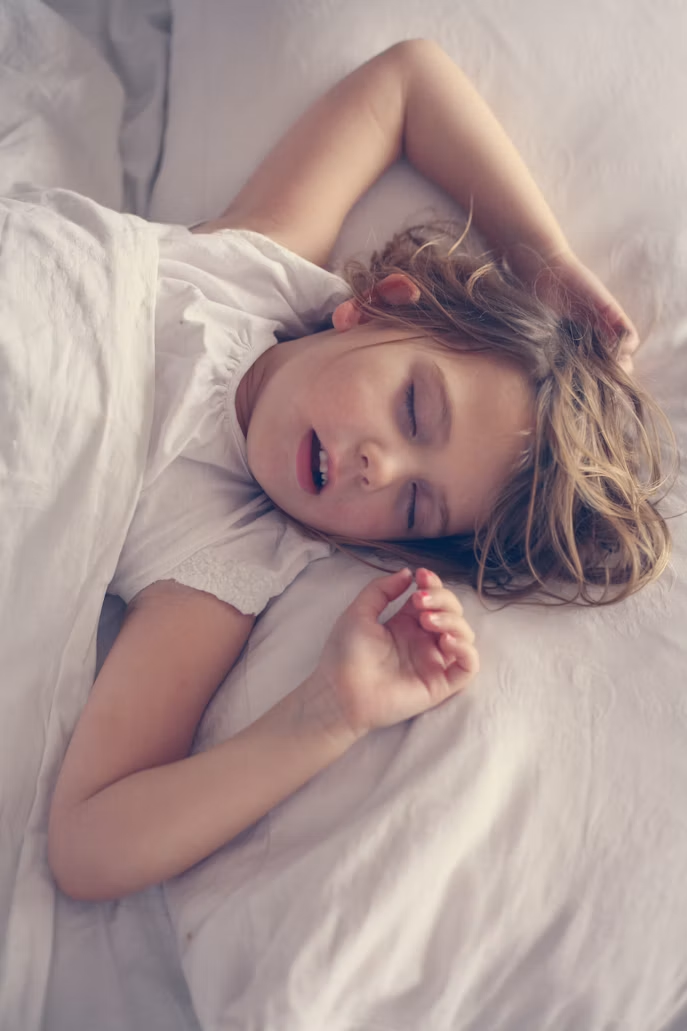
If your child snores loudly, breathes through their mouth, tosses and turns all night, or seems tired and irritable during the day, it may be worth looking more closely at how well they are breathing during sleep.
Occasional snoring during a cold can happen. Frequent or loud snoring, especially when it comes with gasping, pauses in breathing, or restless sleep, can be a sign of an airway problem that should be evaluated.
What Should Parents Watch for at Night?
Some of the most useful clues happen while your child is asleep.
- Loud snoring most nights
- Gasping or choking sounds
- Pauses in breathing
- Restless sleep or frequent movement
- Sleeping in unusual positions
- Mouth breathing
- Heavy sweating during sleep
- Frequent waking
Persistent snoring with abnormal breathing can be associated with obstructive sleep apnea or another sleep related breathing problem. Texas Children's and Children's Hospital of Philadelphia both identify enlarged tonsils and adenoids as common causes in children.
Why Does My Child Snore?
Snoring happens when airflow through the nose or throat becomes partially restricted during sleep.
Common causes in children may include:
- Enlarged tonsils
- Enlarged adenoids
- Allergies
- Nasal congestion
- Colds or respiratory infections
- A deviated septum or other structural narrowing
- Obstructive sleep apnea
The cause is not always obvious from the snoring alone, which is why the pattern of symptoms matters.
Is Snoring Normal in Children?
A child may snore temporarily when they have a cold or significant congestion.
Regular snoring is different. Children's Hospital of Philadelphia notes that frequent snoring in young children and toddlers is not considered normal and may warrant evaluation, especially when it disrupts sleep or occurs with other breathing symptoms.
Simple rule: occasional snoring during an illness may be temporary. Snoring that happens regularly or affects breathing and sleep deserves more attention.
Could Enlarged Tonsils or Adenoids Be the Cause?
Yes. Enlarged tonsils and adenoids are among the most common causes of obstructed breathing during sleep in children.
The tonsils sit in the back of the throat, while the adenoids sit behind the nose. When either becomes enlarged, they can narrow the airway and make it harder for air to move freely while a child is sleeping.
That can lead to snoring, mouth breathing, gasping, restless sleep, or pauses in breathing.
Learn more about enlarged tonsils and adenoids in children.
What Is Pediatric Sleep Apnea?
Obstructive sleep apnea happens when a child's airway repeatedly becomes narrowed or blocked during sleep.
Breathing may become shallow or briefly stop, causing the child to wake partially throughout the night even if they do not remember waking.
The American Academy of Pediatrics recommends that children be screened for snoring because it can be an important sign of obstructive sleep apnea.
Possible Signs of Sleep Apnea in Children
- Loud snoring
- Pauses in breathing
- Gasping or choking during sleep
- Restless sleep
- Mouth breathing
- Difficulty waking in the morning
- Morning headaches
- Daytime sleepiness
- Irritability
- Hyperactivity or difficulty concentrating
Children do not always look sleepy during the day. Poor sleep can sometimes show up as irritability, hyperactivity, or difficulty paying attention instead.
Why Does My Child Breathe Through Their Mouth at Night?
Mouth breathing may happen when nasal airflow is restricted.
Possible causes include enlarged adenoids, allergies, chronic nasal congestion, or other narrowing inside the nose.
If your child regularly sleeps with their mouth open and also snores, the two symptoms may be related.
Can Allergies Make a Child Snore?
Yes. Allergies can cause swelling and congestion inside the nose, making nasal breathing more difficult.
Texas Children's notes that indoor and outdoor allergies can contribute to nasal congestion and mouth breathing, both of which can affect sleep.
If snoring changes with allergy seasons or happens along with sneezing, itchy eyes, or chronic congestion, nasal inflammation may be part of the problem.
What Should I Tell the ENT?
Before your child's appointment, it can help to pay attention to what happens during sleep.
Useful things to note include:
- How many nights per week your child snores
- Whether the snoring is loud
- Whether you see pauses in breathing
- Whether your child gasps or chokes
- Whether they breathe through their mouth
- Whether sleep seems restless
- Whether they are difficult to wake
- Whether behavior or concentration changes during the day
A short video recorded during sleep can also sometimes help show the pattern you are seeing at home.
How Is Snoring Evaluated?
An ENT evaluation may include a review of the child's sleep symptoms and an examination of the nose, throat, tonsils, and airway.
Depending on the findings, the doctor may also consider whether enlarged adenoids, allergies, nasal obstruction, or another condition is contributing.
A sleep study may be recommended when sleep apnea is suspected or when more information is needed about breathing during sleep. Polysomnography is used to help distinguish simple snoring from obstructive sleep apnea.
How Is Snoring in Children Treated?
Treatment depends on the cause.
If Tonsils or Adenoids Are Enlarged
For some children with significant airway obstruction or obstructive sleep apnea related to enlarged tonsils and adenoids, surgery may be considered.
Adenotonsillectomy is an established treatment option for many children with obstructive sleep apnea caused by enlarged tonsils and adenoids.
If Nasal Congestion or Allergies Are Contributing
Treatment may focus on reducing inflammation and improving nasal breathing.
If Another Sleep Problem Is Suspected
Additional testing or referral to a sleep specialist may be appropriate depending on the child's symptoms and medical history.
When Should Snoring Be Evaluated?
Consider having your child evaluated if:
- They snore loudly or regularly
- You notice gasping or pauses in breathing
- They breathe through their mouth most of the time
- Sleep is consistently restless
- They are difficult to wake in the morning
- They seem unusually tired, irritable, or hyperactive during the day
- Concentration or school performance has changed
Snoring and Sleep Evaluation for Children in McAllen, TX
If your child snores regularly, breathes through their mouth, sleeps restlessly, or has pauses or gasping during sleep, Glatz Group can evaluate whether an ear, nose, throat, or airway problem may be contributing.
Learn more about our ENT care for children in McAllen and tonsil and adenoid care for children.
Concerned about your child's snoring or breathing during sleep?
Book an Appointment