Post nasal drip happens when mucus from the nose and sinuses drains down the back of the throat. It can cause frequent throat clearing, coughing, irritation, a feeling of mucus in the throat, and sometimes a sore throat or bad breath.
Many cases improve with simple measures at home, but persistent or recurring post nasal drip may be related to allergies, sinus inflammation, reflux, infection, or another ENT condition.
How Do I Know If I Have Post Nasal Drip?
Post nasal drip can feel different from person to person, but common symptoms include:
- Frequent throat clearing
- A feeling of mucus draining down the throat
- Coughing, especially at night
- A sore or irritated throat
- Hoarseness
- Bad breath
- A feeling that you need to swallow often
These symptoms can also occur with other conditions, so ongoing symptoms may need an evaluation to determine the underlying cause.
What Causes Post Nasal Drip?
Post nasal drip is not a diagnosis by itself. It is a symptom that can develop for several different reasons.
Common causes include:
- Seasonal or environmental allergies
- Colds and other respiratory infections
- Sinus inflammation or sinusitis
- Dry air
- Smoke and other airborne irritants
- Changes in weather
- Reflux
- Structural nasal problems
Because treatment depends on the cause, persistent symptoms should not always be treated the same way.
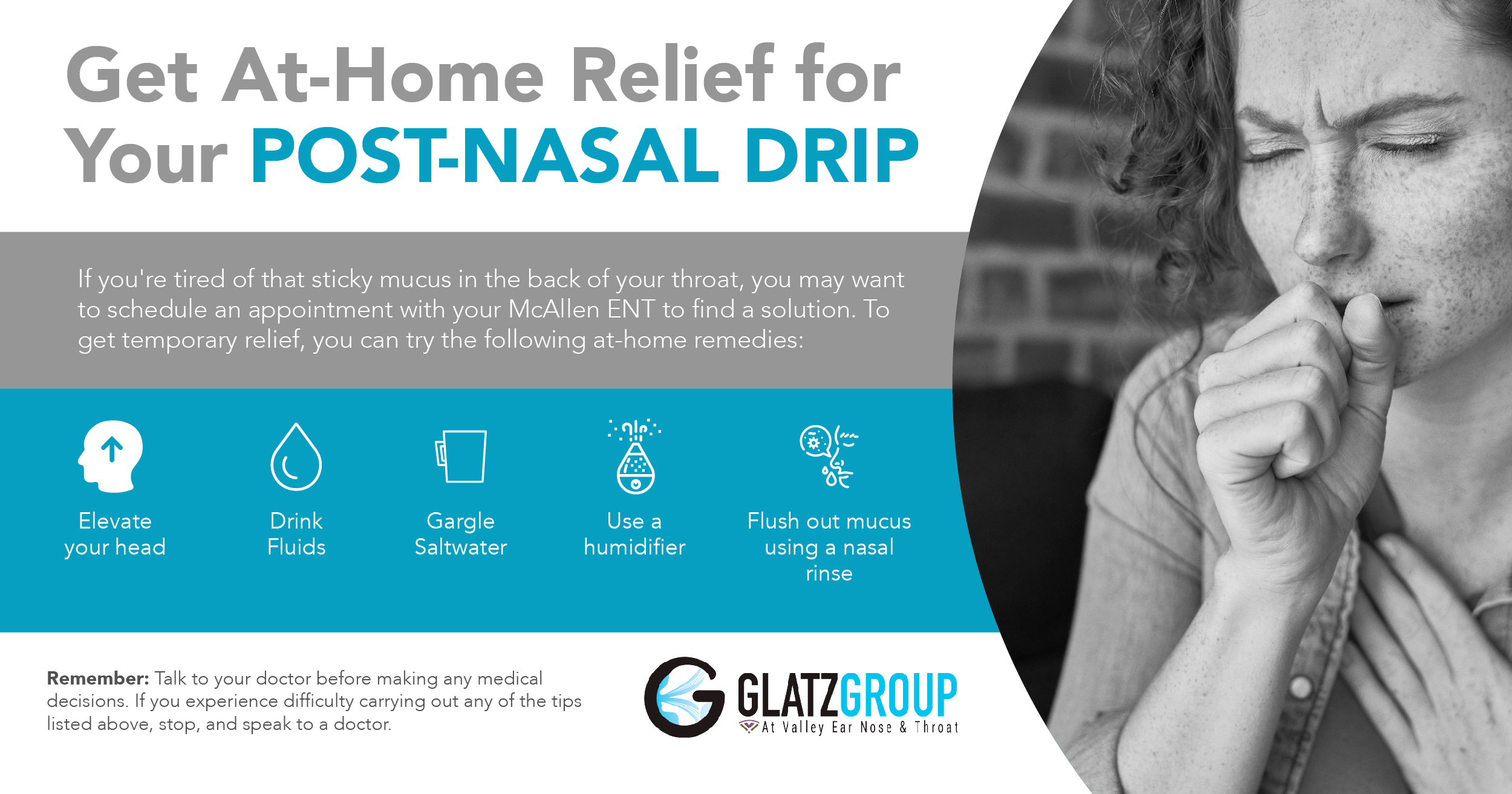
How Can I Treat Post Nasal Drip at Home?
If your symptoms are mild, there are several simple measures that may help reduce throat irritation and make mucus easier to clear.
Stay Hydrated
Drinking enough water can help keep mucus thinner and easier to clear.
Warm fluids may also feel soothing when post nasal drip is irritating the throat.
Use a Saline Nasal Spray or Nasal Rinse
Saline can help moisturize the nasal passages and remove mucus, allergens, and irritants.
If you use a nasal rinse, follow the product instructions and use water that is appropriate for nasal irrigation.
Use a Humidifier
Dry air can irritate the lining of the nose and throat. A clean humidifier may help add moisture to the air and make nasal irritation more comfortable.
Sleep With Your Head Slightly Elevated
Keeping your head and upper body slightly elevated may help reduce the feeling of mucus collecting in the throat while you sleep.
If nighttime sinus drainage is a frequent problem, read more about the best sleeping position for sinus drainage.
Gargle With Warm Salt Water
Warm salt water may help soothe throat irritation caused by drainage.
Avoid Smoke and Other Irritants
Tobacco smoke, vaping aerosols, strong fragrances, and other airborne irritants can worsen nasal and throat irritation.
If smoke seems to trigger your symptoms, read more about how smoking can affect the nose and sinuses.
Can Allergies Cause Post Nasal Drip?
Yes. Allergies can increase nasal inflammation and mucus production, which may lead to ongoing drainage down the back of the throat.
If your symptoms happen during certain seasons, around pets, dust, mold, or other triggers, allergies may be contributing.
Managing the allergy itself can be an important part of reducing post nasal drip.
Can Sinus Problems Cause Post Nasal Drip?
Sinus inflammation can increase mucus production and affect how mucus drains through the nose.
People with recurring sinus pressure, congestion, or sinus infections may also experience frequent drainage into the throat.
If post nasal drip occurs along with facial pressure, nasal obstruction, or recurring sinus symptoms, an ENT evaluation may help identify whether a sinus condition is contributing.
When Should You See an ENT for Post Nasal Drip?
Home care may be enough for mild symptoms, but persistent or recurring post nasal drip can sometimes signal an underlying problem that needs evaluation.
Consider seeing an ENT if you have:
- Symptoms that continue for several weeks
- Frequent or severe throat irritation
- Persistent coughing
- Recurring sinus infections
- Significant nasal congestion
- Difficulty breathing through the nose
- Reduced sense of smell
- Symptoms that repeatedly return after treatment
How Is Post Nasal Drip Treated at the Doctor’s Office?
Treatment depends on what is causing the drainage.
An ENT may examine the nose, throat, and sinuses and consider whether allergies, sinus inflammation, infection, reflux, structural problems, or another condition may be contributing.
Depending on the cause, treatment may involve medication, allergy management, treatment of a sinus condition, reflux management, or another approach based on the individual diagnosis.
Get Help With Post Nasal Drip in McAllen, TX
If post nasal drip keeps coming back, interferes with sleep, or causes ongoing coughing or throat irritation, Glatz Group can help determine what may be causing it.
Glatz Group provides sinus care in McAllen for patients throughout the Rio Grande Valley.
Get Answers About Your Post Nasal Drip
Book an Appointment